

“Why have I forgotten what I just learned?”
You are thrilled to have finished a training course. Two weeks later, while trying to apply the new competencies, you seem to have forgotten everything. Do you recognize this?
All you want to know about the famous forgetting curve.
You are thrilled to have finished a training course. Two weeks later, while trying to apply the new competencies, you seem to have forgotten everything. Do you recognize this?
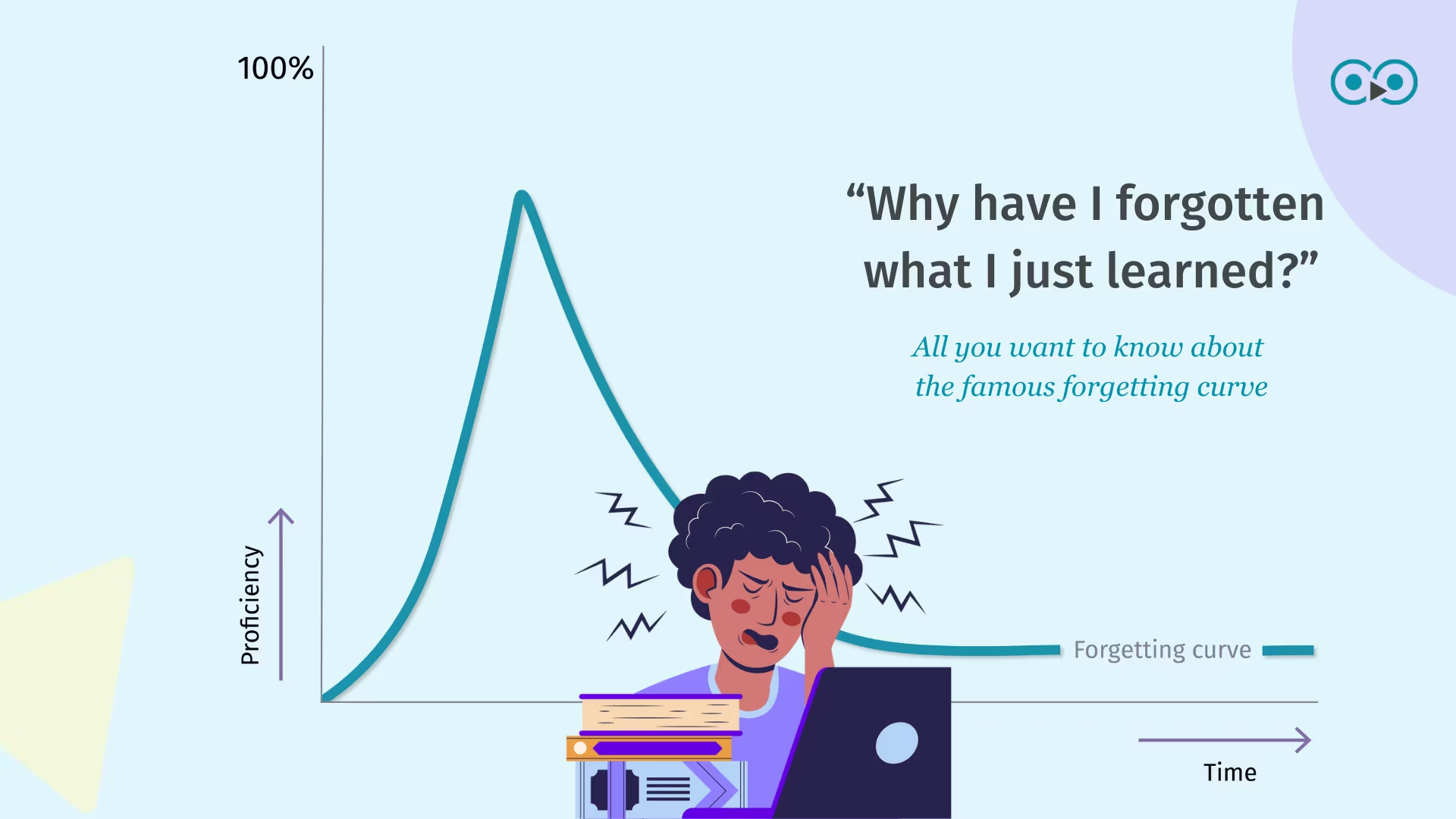
The forgetting curve, first described by Hermann Ebbinghaus in 1885, illustrates how knowledge and skills are lost over time when there is no attempt to retain them. Several elements in learning can contribute to the forgetting curve kicking in, which results in the decline of memory retention over time. If you know what the key factors are, you can fight the forgetting curve:
- Lack of Repetition and Review : Without repeated exposure to information, memory retention declines rapidly. 💡Regular review sessions help reinforce learning and slow down forgetting.
- Time Lag Between Learning Sessions : The longer the interval between learning sessions, the greater the amount of information forgotten. Spacing out learning sessions can help reinforce memory and combat the forgetting curve.
- Depth of Processing : Shallow processing, such as rote memorization, leads to faster forgetting.
💡Deeper processing, which involves making meaningful connections with the material, enhances long-term retention. 4. Interference : New information can interfere with the retention of previously learned material (retroactive interference), and old information can interfere with learning new material (proactive interference). This interference contributes to forgetting. 5. Lack of Meaningful Context : Information that lacks context or personal relevance is more easily forgotten.
💡Integrating new information with existing knowledge and making it relevant to the learner can improve retention. 6. Absence of Active Engagement : Passive learning (e.g., listening to lectures without interaction) is less effective than active learning strategies (e.g., discussions, practice, application) for long-term retention. 7. Stress and Fatigue : High levels of stress and fatigue can impair cognitive functions and memory retention.
💡 A conducive learning environment that minimizes stress and allows for adequate rest can help mitigate forgetting. 8. Overload of Information : Trying to learn too much information at once can overwhelm the brain and lead to increased forgetting.
💡 Breaking down learning into manageable chunks can improve retention. 9. Lack of Application and Practice : Without opportunities to apply and practice new knowledge and skills, learners are more likely to forget what they have learned.
💡 Practical application helps reinforce memory. 10. Insufficient Use of Mnemonics : Mnemonics and other memory aids can help improve retention. Without these tools, learners may struggle to retain information effectively.
To fight the forgetting curve, educational strategies such as adaptive microlearning, spaced repetition, assessment-based learning, meaningful context, and frequent review are essential. These methods help reinforce learning and improve long-term memory retention.
Did you enjoy this article?
Subscribe and we will send you more like this from time to time. No spam, ever. Just thoughtful reads on the science of learning and how it meets critical business needs.