

Context-dependent memory: why training should resemble the moment of use
Knowledge can feel available in training yet be difficult to retrieve at work. Relevant environmental cues and varied practice can prepare it for use.
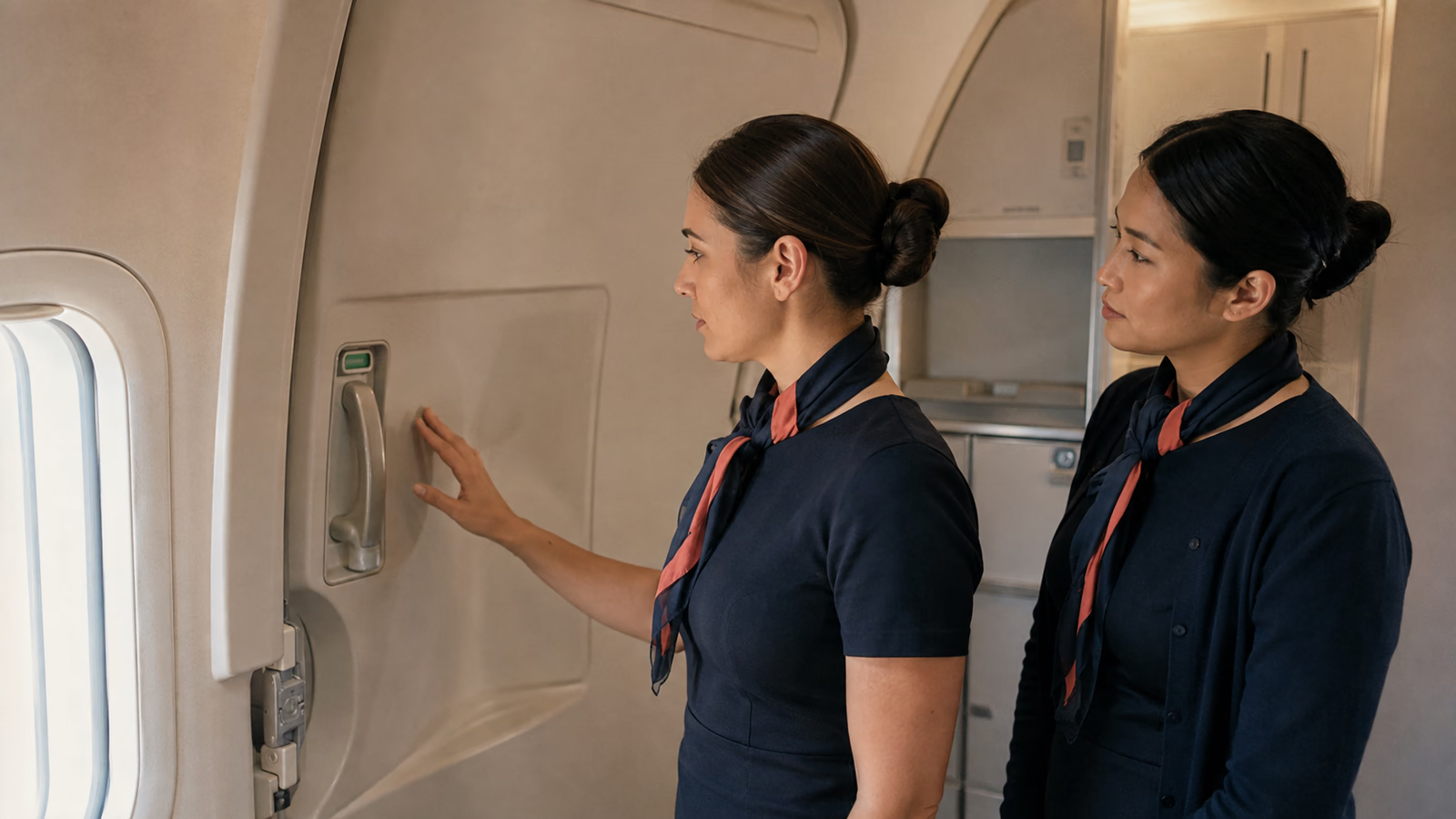
A cabin crew member may explain a door check perfectly in a briefing room, then hesitate when faced with the real handle, indicator, lighting, and time pressure. The knowledge has not necessarily vanished. The cues available when it was learned may simply be different from the cues available when it must be retrieved.
That is the useful surprise behind context-dependent memory in training: physical surroundings and sensory details present while we learn can become part of the route back to a memory. Training that ignores the moment of use may therefore produce confident answers in class without reliable independent performance at work.
What context-dependent memory means for training
Memory is not a document stored under one permanent address. Retrieval works through cues. A meta-analysis of environmental context-dependent memory (opens in new tab) found reliable context effects overall, while showing that strong non-contextual cues can reduce them.
Most of that evidence concerns recall tasks, not workplace performance. The guidance below is therefore a design inference, not a promise that copying a workplace will produce mastery: represent work cues, vary incidental surroundings, and test independent execution.
This mechanism also differs from stress. Our article on how stress affects training recall explains what pressure can do to retrieval. Context-dependent memory can matter even in a calm situation. The employee may know the correct method but fail to recognize that this is the moment to use it.
This focus is narrower than matching practice to the mental action required at work. That article asks what learners practise doing. Here, the question is which environmental cues help recall and how variation prevents dependence on one setting.
Recreate the cue, not the whole workplace
Simulation is valuable when people must coordinate physical actions, equipment, timing, or communication. But realism is not an all-or-nothing choice. A short question can represent the functional context if it supplies the right cue and requires the right decision.
Suppose cabin crew need to notice that a door status does not match the expected configuration. A weak practice item asks for the definition of an indicator color immediately after explaining it. The lesson heading, nearby diagram, and recent explanation all point towards the answer. Those are training cues, not work cues.
A stronger item starts with the situation: boarding is about to begin, the door appears closed, and the indicator shows an unexpected state. What should the crew member verify or do next? The learner must notice the operational signal and retrieve the response without the answer being announced first.
The same principle applies in healthcare. Instead of asking a nurse to repeat an escalation rule under a heading that names the condition, present the observations they would encounter and ask for the next safe action. This rehearses recognizing when the skill is required.
Curious how it works?
Get a free demo account and try adaptive learning yourself.
Vary the details so recall does not become brittle
Making practice resemble work has a trap: one perfectly repeated scenario can become another narrow context. Learners may remember the room, character, or wording instead of the underlying signal.
Keep meaningful cues stable while changing details that should not control the response. Vary the aircraft layout, passenger situation, order of information, or plausible distraction. In clinical training, change the ward or how a concern is expressed while preserving the observation that should trigger escalation.
This is one reason recurrent exam cramming is a weak foundation for rarely used safety knowledge. It prepares people for a familiar test context. Distributed practice across varied situations asks whether the knowledge remains available when the surface details change.
Remove cues that only exist in training
Training often supplies invisible help: topics arrive in order, the heading names the rule, relevant facts are highlighted, and an instructor signals when an answer needs reconsideration. A learner can follow that support without acting independently.
Review a practice activity and ask three questions:
- What would trigger this skill at work? Include that cue early enough for the learner to notice it.
- What currently gives the answer away? Fade headings, hints, repeated wording, and immediate prompts that will not be present later.
- What must the employee do independently? Require the relevant choice, sequence, explanation, or escalation, then check physical and interpersonal performance through observation.
If the real task allows an approved checklist, practise noticing when it is needed, finding the right section, and applying it correctly. Independence means using available support without a trainer supplying the judgement.
Connect digital practice to the point of work
Drillster can reinforce critical knowledge with adaptive practice and feedback, returning weak material sooner and strong material less often. The content owner makes that reinforcement useful by building questions around credible cues, varied cases, and the decisions a role actually requires.
Digital practice should complement the environments where full performance can be observed. In aviation, a short scenario can keep door-operation knowledge retrievable between practical sessions, while hands-on training confirms physical execution. Our guide to cabin crew safety knowledge between flights shows how that reinforcement layer fits alongside recurrent and practical training.
The Air France success case shows remote adaptive learning within a broader cabin crew training strategy. Ask which knowledge should remain readily retrievable, which cues practice can represent, and which skills still need direct observation.
Test retrieval somewhere new
Completion shows that an employee reached the end of an activity. A score in the same setting shows what they could retrieve under those conditions. Neither proves that the skill will appear independently in a different moment.
After practice, change the setting or surface details. Remove the trainer's prompt and present an equivalent cue. Ask the employee to identify the situation, choose the response, and, where risk warrants it, demonstrate the task under realistic supervision.
If important knowledge looks strong in training but disappears at the point of work, bring our team one real task and the cues that should trigger it. We can make practice resemble the moment of use without tying learning to one scenario.
References
- Smith, S. M., and Vela, E. (2001). Environmental context-dependent memory: a review and meta-analysis (opens in new tab).
Did you enjoy this article?
Subscribe and we will send you more like this from time to time. No spam, ever. Just thoughtful reads on the science of learning and how it meets critical business needs.