
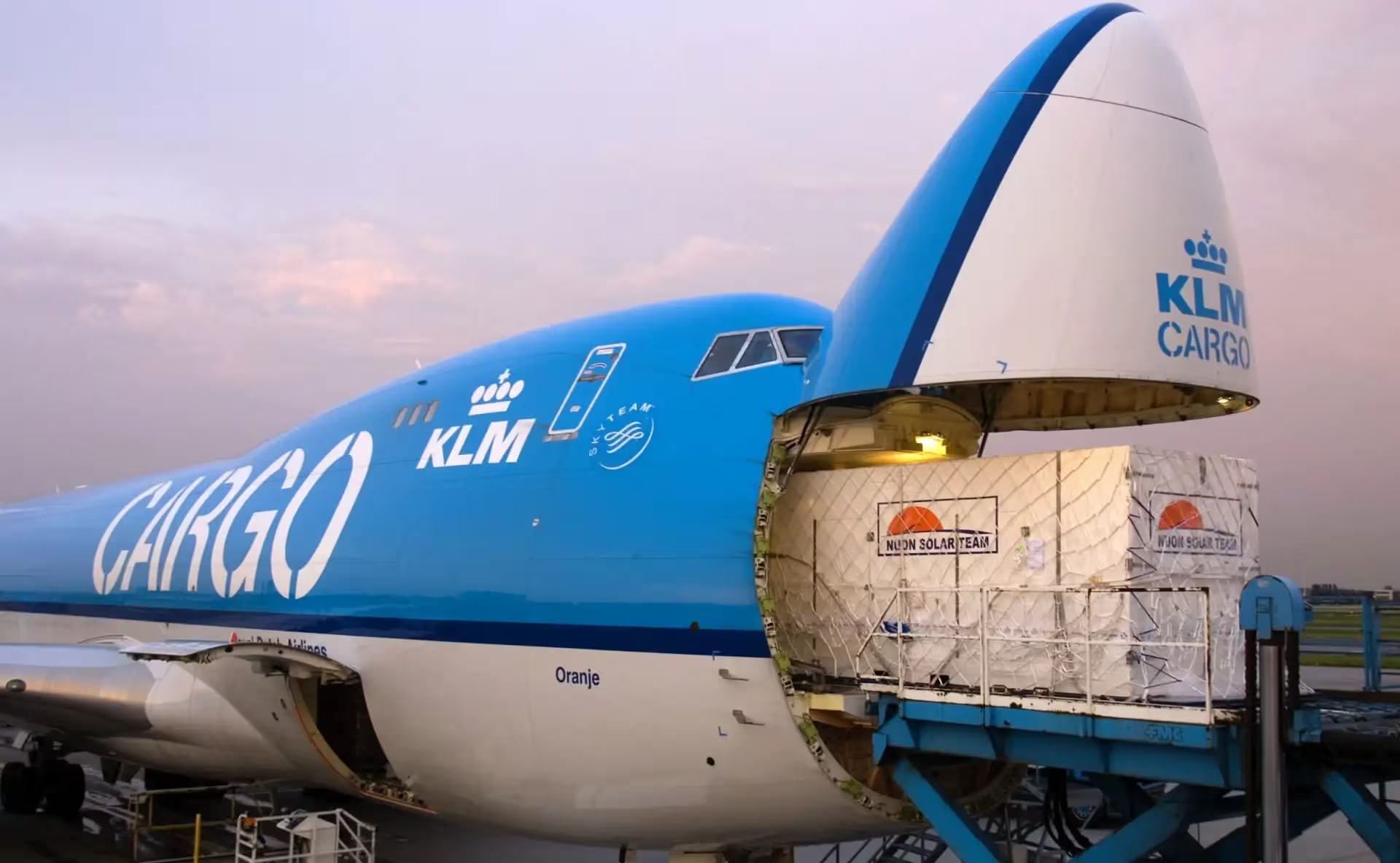
KLM Cargo
KLM Cargo connects 457 destinations worldwide with nearly 2,000 employees moving 1.2 million tons of cargo each year. Keeping that workforce reliably certified required more than a periodic exam cycle. With Drillster, KLM Cargo replaced classroom sessions and annual tests with continuous adaptive microlearning, and earned regulatory approval to eliminate face-to-face training requirements after just two years.
KLM Cargo
Read the complete story below, or request a PDF copy to share with your team.
The challenge
KLM Cargo operates one of the world's most extensive air freight networks, connecting 457 destinations globally, handling 1.2 million tons of cargo every year, and employing nearly 2,000 people whose certified knowledge of procedures, protocols, and safety requirements underpins the whole operation.
For years, that certification requirement was met through annual recurrent training. Employees gathered at a venue, spent a full day with instructors and materials, and sat an exam. On paper, the cycle fulfilled its purpose. In practice, it created three persistent problems.
First, the logistical burden: booking venues, scheduling trainers, sourcing materials, and pulling employees from operations for a full working day added up to a significant annual cost. Second, the stress: knowledge faded between certification cycles, and employees had to cram before each exam, creating anxiety rather than genuine readiness. Third, and most critical for a safety-driven organisation, regulatory updates introduced during the year were rarely absorbed when they were issued. Employees typically encountered those changes only in the weeks before the exam.
The core question became unavoidable: what is the point of a recurrent exam if everyone forgets the information within weeks?
From periodic exams to continuous competence
Answering that question meant rethinking the model entirely. Rather than concentrating a year of compliance content into a single classroom session, KLM Cargo chose continuous, distributed learning.
KLM Cargo implemented Drillster's adaptive learning application with microlearning sessions of just 5 to 10 minutes. Employees engage with the material regularly through short, focused drills that fit naturally into the working day, without removing them from operations for extended periods.
The adaptive algorithm adjusts to each individual's knowledge level. More time goes to difficult material, less to what is already well understood. When proficiency on a topic drops below the required threshold, a notification prompts a targeted review before the gap becomes a risk.
Content updates follow the same logic. When regulations or internal procedures change, the relevant drills are updated immediately. Employees encounter the new material in their next session and reinforce it through spaced repetition until it is genuinely retained. Photos, videos, and case studies anchor the content in real operational situations, making it directly applicable on the job.
A regulatory breakthrough
Two years into the program, KLM Cargo reached a milestone that had not previously been achieved in the aviation sector: regulatory approval to substitute face-to-face training and recurrent exams with the Drillster methodology entirely.
The approval required demonstrating that continuous adaptive learning produced more reliable and verifiable competence than the traditional exam cycle. The evidence convinced the Royal Military Constabulary and the AIVD, both of which endorsed the new approach. Employees who maintain 80 to 100 percent proficiency throughout the year no longer need to attend classroom training at all. Their continuous record of genuine competence, visible in real time through Drillster's compliance tracking, replaces the annual exam.
The results
After six years of Drillster implementation, the impact reaches across cost, safety, governance, and culture:
Regulatory approval to replace face-to-face training and recurrent exams, earned after two years of implementation
Cost and time savings through elimination of classroom logistics, trainer hours, and full-day operational absences
Improved safety and daily performance through continuous knowledge retention, replacing temporary exam peaks
Transparent compliance tracking giving management real-time visibility into knowledge levels across the workforce
Reduced employee stress through self-paced distributed learning, removing the pressure of annual high-stakes cramming
Authority support from the Royal Military Constabulary and the AIVD
Expanded rollout across pilots, cabin crew, maintenance teams, and ground services