
Microlearning
A session fits between two meetings. That is what makes daily reinforcement realistic. It works with the workday, never against it.

Instead of slides people click through once and never reopen, Drillster asks them to answer, decide, and apply. Practice adapts to each person and returns at calculated intervals, so competence stays reliable year-round.
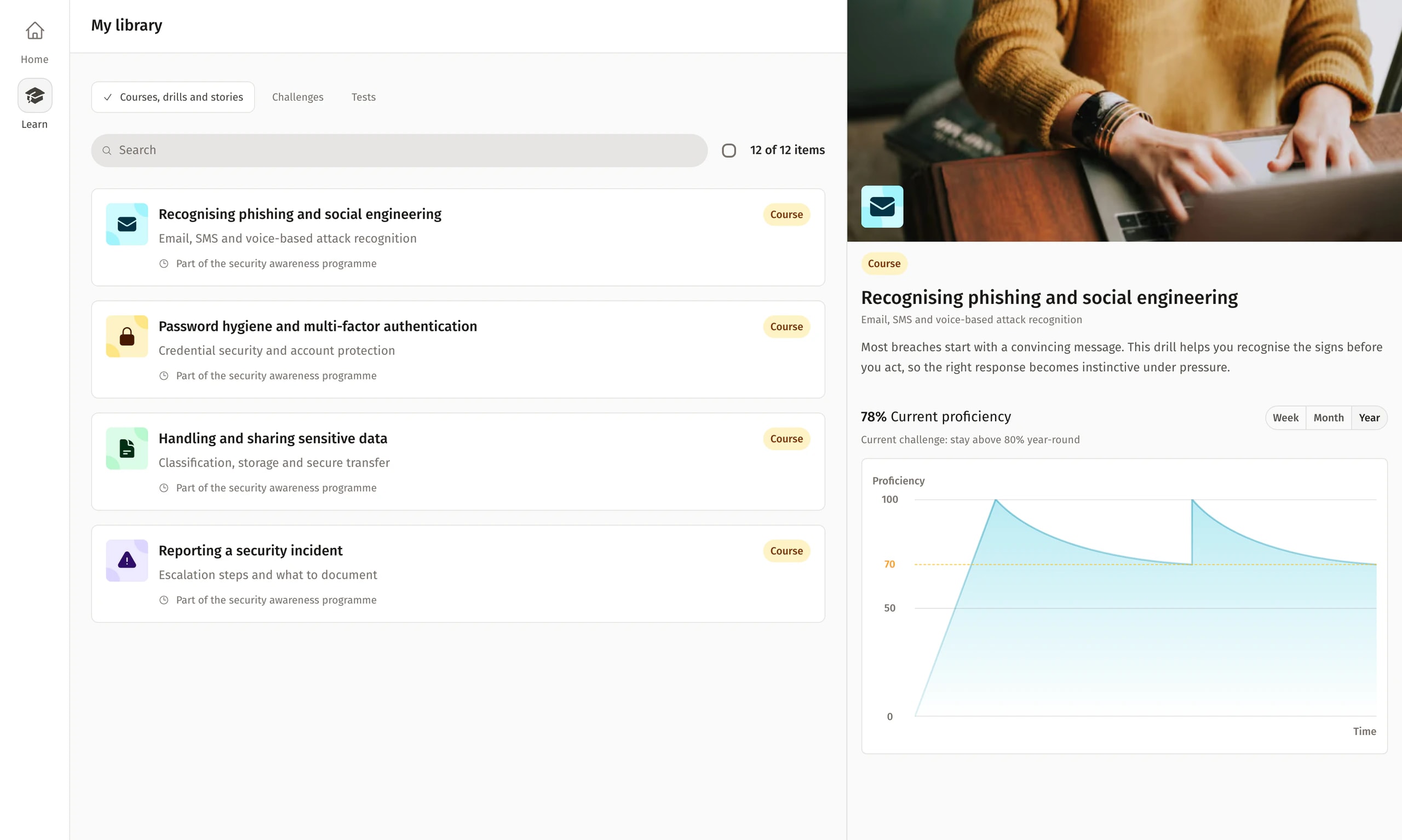
Every session asks people to answer, decide, and apply in scenarios from their own domain. Drillster adapts to individual strengths and gaps, keeps sessions short enough to fit between tasks, and schedules the next one before knowledge starts to slip.
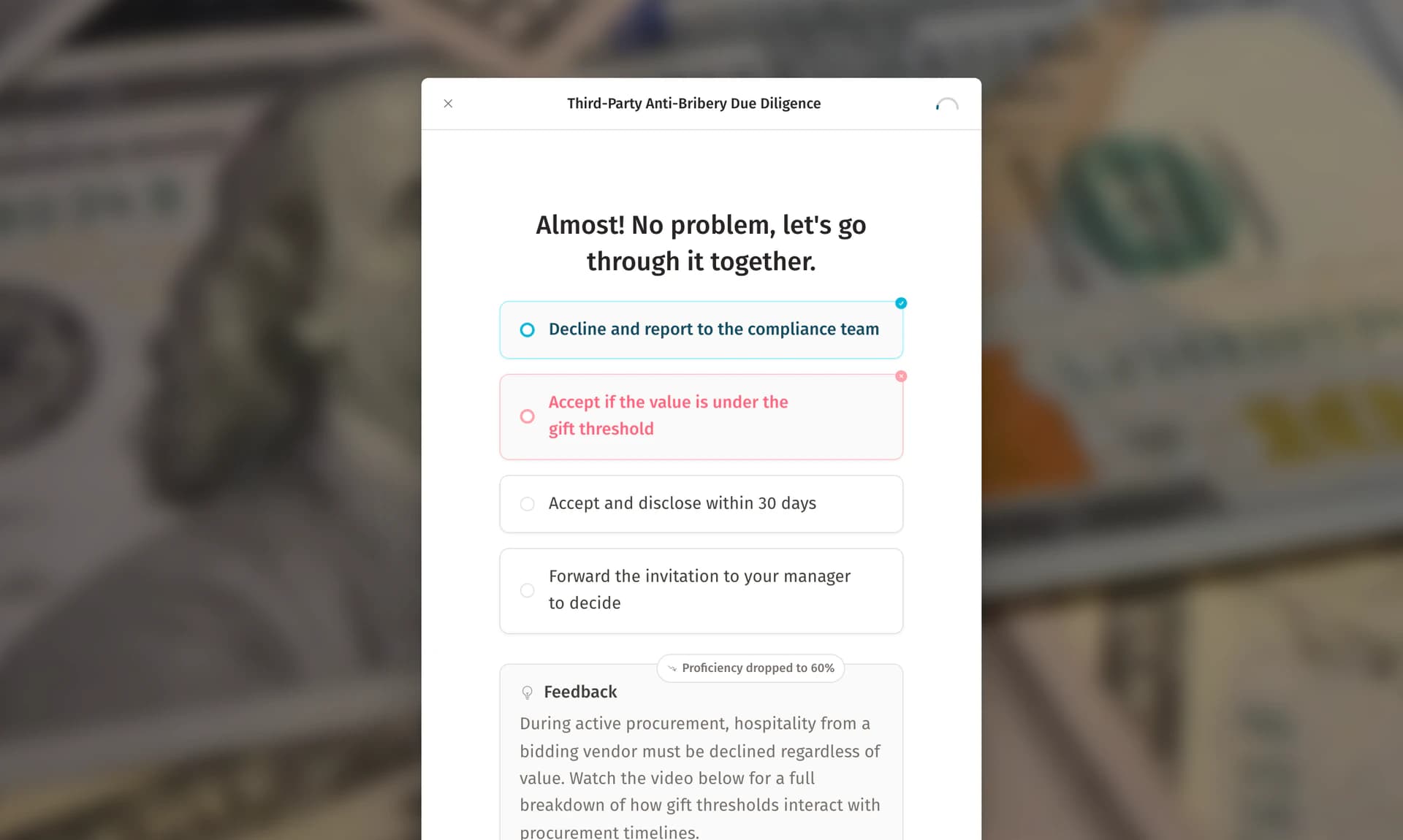
You open a drill and start answering. Each question targets the areas where your knowledge is weakest. You face real scenarios, make decisions, and get corrected on the spot. Your proficiency updates after every answer. By the time you close the app, the system already knows what to bring back next.
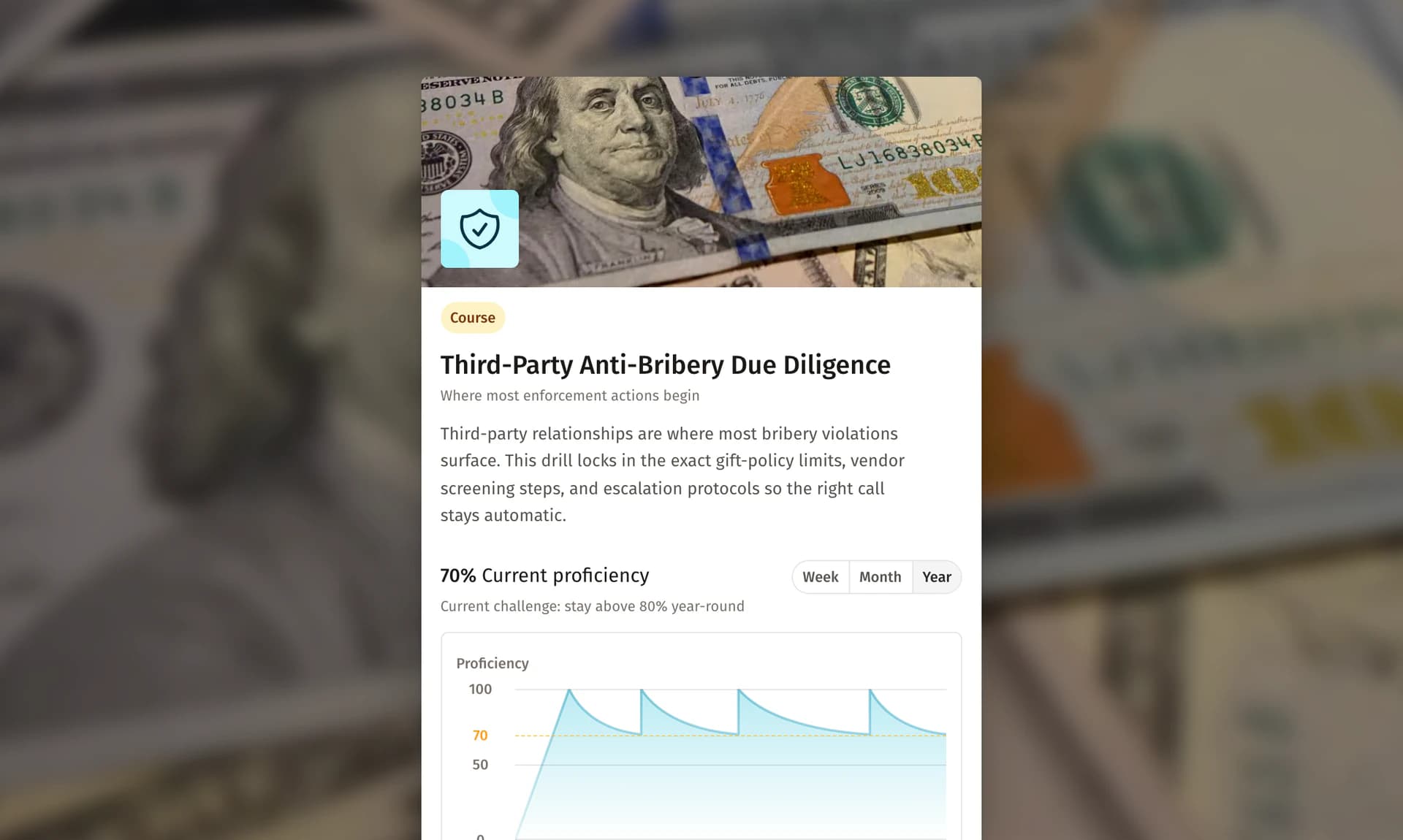
After each session, Drillster maps what you know and what is starting to fade. It calculates the right moment to bring each topic back, so you practice just before knowledge would have slipped.
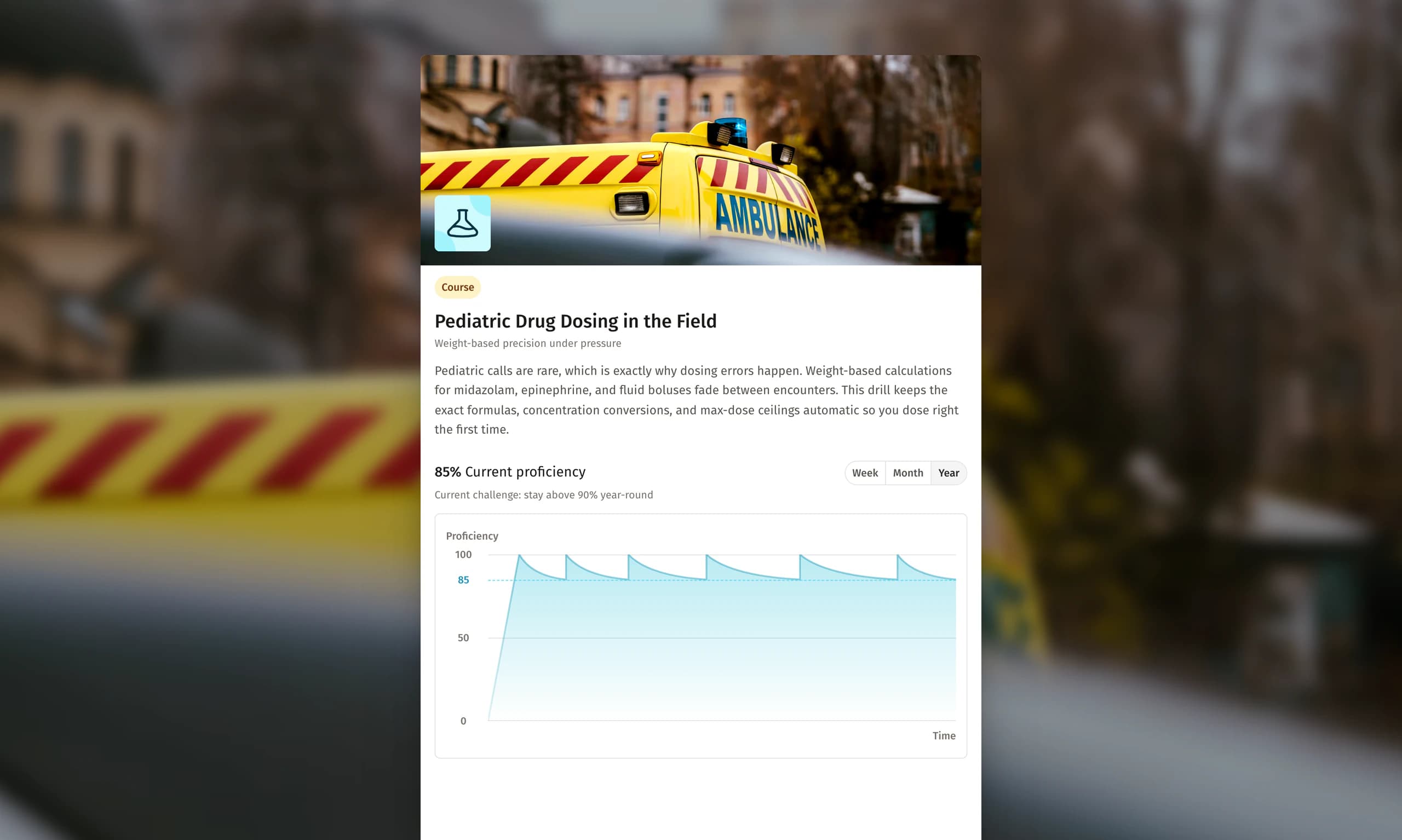
The short sessions, the real scenarios, the adaptive timing. None of these work in isolation. Each factor amplifies the others, and together they compound into competence people can rely on.
A session fits between two meetings. That is what makes daily reinforcement realistic. It works with the workday, never against it.
Every session asks people to recall, decide, and apply. The act of retrieving knowledge is what strengthens it.
After each answer, people see exactly what was right and why. Understanding lands while the attempt is still fresh.
Two people in the same role follow different paths. The system maps individual strengths and gaps and directs effort where it counts.
Practice comes back at calculated intervals that stretch as competence solidifies. Each return is timed to the point where knowledge would otherwise start to fade.
Challenges, streaks, and leaderboards give people a reason to come back. Engagement is woven into how practice works, so motivation sustains itself over time.
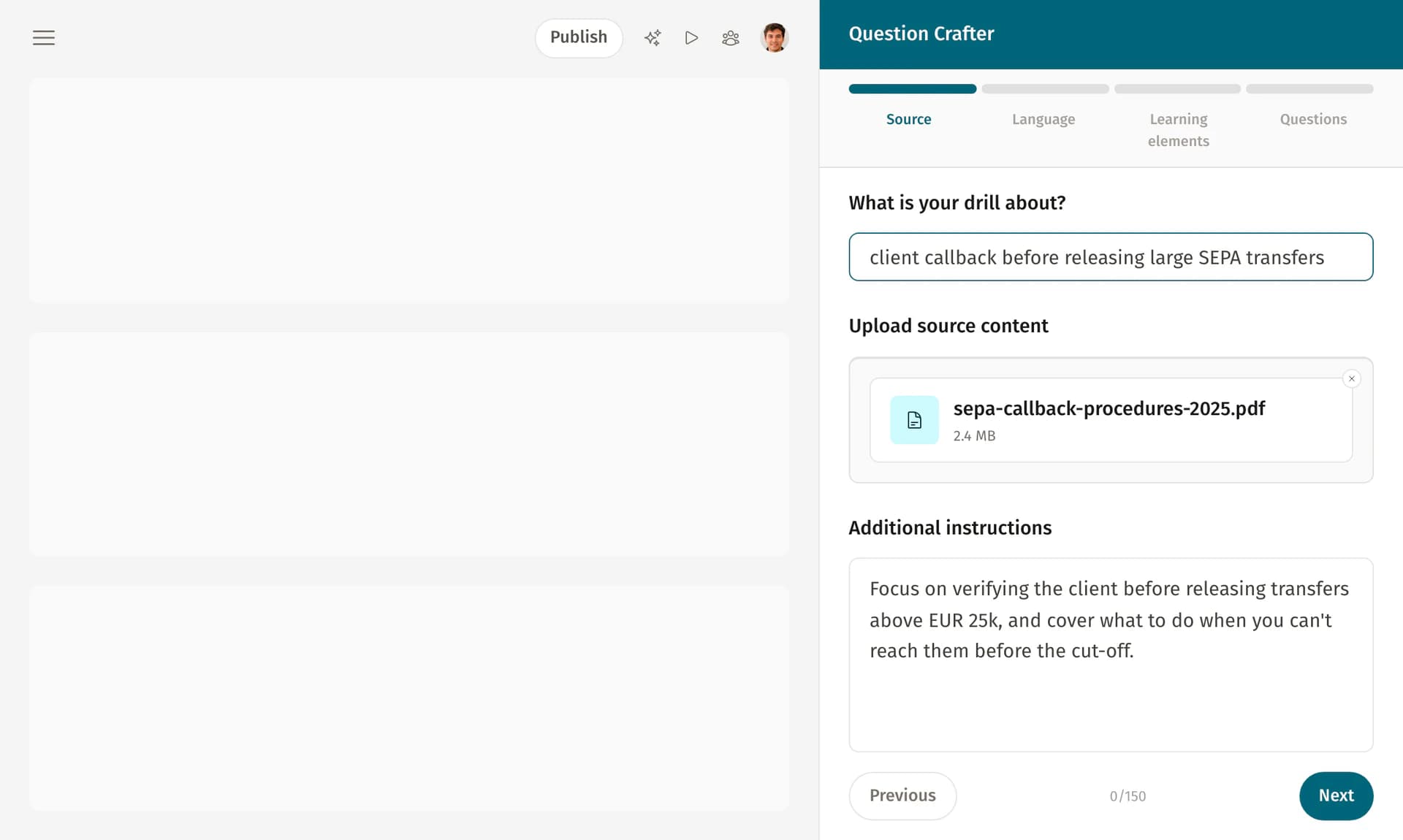
Most organizations already have the knowledge documented in PDFs, manuals, and slide decks. The Drillster Question Crafter reads those documents and generates adaptive drill content ready for expert review.


“I enjoy working with Drillster because it is a user-friendly product. It is very effective in testing the knowledge of the cabin attendants and they also enjoy working with it very much.”
Eva Maria Kroesen
Flight safety and security trainer
What business and training leaders ask when evaluating Drillster for the first time. and we will walk you through it.
Most e-learning delivers content once and marks it complete. Drillster works the other way around. People answer questions, receive immediate feedback, and practice again at calculated intervals. The system adapts to each person: someone who retains safety protocols well sees less repetition there and more focus where gaps exist. The result is not a better course, but an ongoing process that keeps competence reliable after the course is finished.
Most sessions take about four minutes. Drillster schedules reinforcement at calculated intervals, not daily, so people practice only when the system detects competence is starting to weaken. The time investment is small and targeted. Many teams find it easier to fit into real workdays than longer traditional training sessions.
That is part of how the method works. When someone retrieves an answer incorrectly, immediate feedback appears while the attempt is still fresh in memory. Research shows this combination of retrieval effort and correction strengthens long-term retention more than passive review. Drillster then schedules that topic for earlier follow-up, concentrating practice where each person needs it most.
Yes. Drillster connects through SCORM and LTI, so content can be delivered inside your existing LMS without migration. Many organizations start by adding Drillster as a retention layer for topics they already teach. Over time, some teams replace parts of traditional instruction with adaptive practice because it proves more effective for keeping critical knowledge accessible.
Any knowledge where forgetting has real consequences. Safety procedures, regulatory requirements, product and process knowledge, clinical protocols, and operational standards are common starting points. The shared pattern is that people need to act from memory and judgment in live conditions, without time to consult a manual. If the knowledge is reference-only and can always be looked up, adaptive reinforcement adds less value.
Decades of cognitive science research confirm that spaced retrieval practice improves long-term retention compared to one-off instruction. People retain more when they actively answer questions than when they re-read material. Drillster applies these principles at organizational scale, with reporting that shows where competence is strong, where it is declining, and where reinforcement is needed.

We will show you exactly how Drillster works with your content, your teams, and your existing systems. No generic pitch.